
 See Our Latest Article on HelloNation
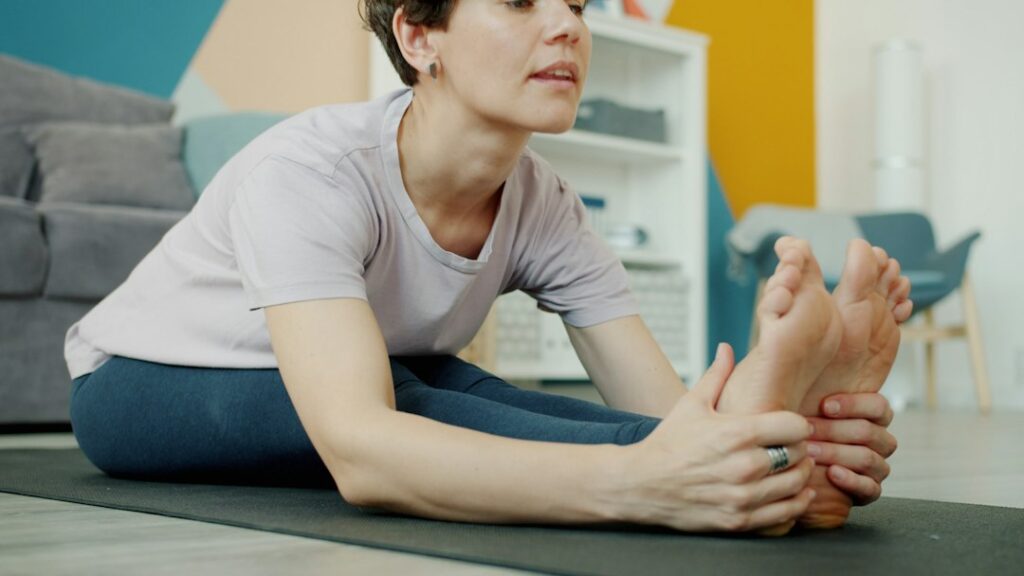
Mobility exercises are controlled movements that help joints, muscles, and the spine move more comfortably through everyday ranges. They are different from intense stretching or strength training: the goal is usually to reduce stiffness, improve movement confidence, and make ordinary activities feel easier.
For residents in Potsdam, NY, a short mobility routine can be especially useful during long indoor periods, cold weather, or weeks when snow, ice, and reduced outdoor activity lead to more sitting. These exercises require little space and no special equipment.
What are mobility exercises?
Mobility exercises take a joint through a comfortable range of motion while encouraging steady breathing and relaxed movement. Examples include turning the head gently, circling the shoulders, moving the ankles, or practicing a controlled sit-to-stand.
Flexibility usually describes how far a muscle or joint can stretch. Mobility includes flexibility, but also involves coordination, strength, balance, and control. Someone may be flexible enough to reach toward the floor but still have difficulty squatting, stepping onto a curb, or turning comfortably.
Mobility work should feel mild to moderate. A gentle pulling sensation or mild stiffness may be acceptable, but sharp, burning, electric, or worsening pain is a reason to stop.
How often should a person practice?
A practical starting point is five to ten minutes once or twice a day. Mobility work can be done after waking, during a break from desk or household tasks, or before a walk.
Consistency matters more than a long session. A person who performs a few controlled movements most days may gain more benefit than someone who completes an intense routine only occasionally.
Begin with one set of five to ten repetitions for each movement. Move slowly enough to notice whether one side feels different from the other. Avoid forcing a joint to match the motion of the opposite side.
Which exercises are safe starting points?
The following sequence is appropriate for many adults who want gentle, general movement. Use a stable chair, countertop, or wall nearby when balance is uncertain.
Seated ankle pumps and circles
Sit with both feet supported or extend one leg slightly.
- Point the toes away, then draw them back toward the shin.
- Make five slow circles in each direction.
- Repeat on the other side.
This movement can be useful after prolonged sitting and may help prepare the ankles for walking on uneven or slippery surfaces. Keep the motion comfortable rather than trying to create a large circle.
Seated knee extensions
Sit toward the front of a sturdy chair with the back straight but relaxed.
- Slowly straighten one knee until the leg is nearly level.
- Pause briefly without locking the knee.
- Lower the foot with control.
- Repeat five to ten times on each side.
This encourages movement at the knee and activates the thigh muscles. If the movement creates a sharp pain inside the joint, reduce the range or stop.
Pelvic tilts
Lie on your back with knees bent and feet flat, or perform the movement seated if getting onto the floor is difficult.
- Gently tighten the lower abdomen.
- Flatten the lower back slightly toward the floor or chair.
- Relax back to a neutral position.
- Repeat five to ten times without holding the breath.
The movement should be small. Pelvic tilts are not meant to force the spine flat or create a strong abdominal contraction.
Cat-cow movement
Use hands and knees on a firm, nonslip surface. A folded towel may make the knees more comfortable.
- Place the hands under the shoulders and knees under the hips.
- Slowly round the back while allowing the head to follow naturally.
- Then gently move toward a slightly arched position without collapsing the lower back.
- Repeat five to eight times.
People with wrist, knee, or balance limitations can perform a similar movement while seated: round the upper back, then gently lift the chest.
Shoulder rolls and wall slides
For shoulder rolls, lift the shoulders gently, move them back, and lower them. Repeat five times, then reverse the direction.
For wall slides:
- Stand with the back near a wall, keeping the ribs relaxed.
- Bend the elbows and slide the arms upward only as far as comfortable.
- Slowly return the arms to the starting position.
Do not force the hands overhead. A smaller range is useful if the shoulders feel stiff.
Hip hinge practice

Stand in front of a sturdy chair with feet about hip-width apart.
- Place the hands on the hips.
- Push the hips slightly backward while keeping the spine long.
- Bend the knees enough to remain comfortable.
- Return to standing by pressing through the feet.
This teaches the body to bend from the hips rather than rounding excessively through the lower back. It can make tasks such as lifting a light laundry basket or reaching toward a low shelf more controlled.
Supported balance shifts
Stand beside a countertop or behind a sturdy chair.
- Shift weight slowly from the right foot to the left foot.
- Keep both feet on the floor.
- Progress by briefly lifting one heel, then the other.
- Later, practice standing with one foot slightly ahead of the other.
Balance exercises should always be performed near stable support. During icy months, avoid practicing near entryways, loose rugs, or areas where wet footwear may reduce traction.
Should mobility exercises be done before or after activity?
Gentle joint movements can be used before activity to help the body transition from rest to motion. For example, ankle circles and shoulder rolls may be suitable before a walk or household project.
Longer, relaxed stretches are often more comfortable after the body is warm. Mobility exercises do not replace a gradual warm-up for strenuous work such as shoveling, carrying heavy items, or vigorous exercise. Start with easy movements and increase effort gradually.
A brief walk around the home, marching in place, or several slow sit-to-stands can raise body temperature before more demanding activity.
What mistakes should be avoided?
Several common habits can make a mobility routine less useful or less safe:
- Bouncing into a stretch
- Holding the breath
- Moving quickly through a painful range
- Trying to force both sides to move identically
- Exercising directly on a cold, slippery, or cluttered floor
- Continuing despite numbness, tingling, sudden weakness, or increasing pain
- Assuming soreness always means the exercise is working
Mobility should support normal activity, not leave a person significantly more painful afterward. If symptoms remain worse for hours or interfere with sleep and daily tasks, reduce the intensity and pause the routine.
When should at-home exercises be postponed?
Extra caution is appropriate after a recent injury, surgery, fall, or sudden change in symptoms. People with known joint instability, neurological conditions, severe osteoporosis, or significant balance problems may need an individualized exercise plan.
Urgent medical evaluation is warranted for symptoms such as sudden loss of strength, new loss of bladder or bowel control, severe chest pain, fainting, major swelling after an injury, or numbness that rapidly worsens. These symptoms are not typical exercise stiffness.
For most people, a useful mobility routine is calm, controlled, and repeatable. The movements should fit comfortably into daily life, whether that means loosening the ankles after sitting, opening the shoulders after indoor work, or practicing balance before returning to outdoor activities.
